Resurfacing is no longer just a procedure.
For many years, resurfacing was positioned as a single, decisive step. A powerful treatment, a clear indication, and a patient willing to commit to downtime from the outset.
That model still exists, but it no longer reflects how most patients enter aesthetic care today, nor how clinics are structured to support them.
What clinics increasingly experience is a broader patient audience: individuals interested in improving skin quality, addressing accumulated damage, and maintaining healthier-looking skin over time. These patients are curious, informed, and motivated – but not always ready for intensive intervention as a first step.
This shift has important implications. Not only for how resurfacing is performed, but for how it is presented, explained, scheduled, and managed in everyday practice.
Resurfacing is no longer just a procedure. It is a journey, and clinics that recognize this are adapting accordingly.
Patients do not arrive at resurfacing with the same level of readiness. Some are exploring aesthetic treatments for the first time. Others are returning after previous experiences. Many want visible improvement but are cautious about downtime, recovery, or commitment.
When resurfacing is offered only as a single, high-intensity option, a large portion of patients simply remain outside the conversation. Not because they are uninterested, but because the entry point feels too abrupt.
A more progressive approach acknowledges a simple reality: patients build trust through experience.
By allowing patients to begin with lighter interventions and progress when readiness is established, clinics create a clearer, more comfortable path forward. This does not replace deeper resurfacing – it supports it.
From the patient’s perspective, this approach:
- reduces uncertainty
- clarifies expectations
- allows decisions to evolve over time
From the clinic’s perspective, it creates structure where there was once friction.
The Business Challenge of One-Off Procedures

From a business standpoint, single, isolated procedures are difficult to manage consistently.
They require:
- longer consultations
- complex explanations
- individualized scheduling decisions
- repeated justification of treatment depth
When every resurfacing case is presented as a unique exception, it becomes harder for teams to align, harder for patients to understand their options, and harder for clinics to build predictable workflows.
Programs, on the other hand, introduce order. A structured resurfacing offering allows clinics to:
- define clear treatment intents
- standardize how options are presented
- plan schedules more effectively
- create continuity across visits
This does not reduce personalization.
It supports it, by providing a clear framework within which personalization can happen.
From Entry-Level to Intensive: A Progressive Resurfacing Model
A progressive resurfacing model recognizes that resurfacing serves different purposes at different stages.
Some treatments focus primarily on:
- clearing visible damage
- refreshing skin appearance
- supporting overall skin quality
Others aim for:
- deeper correction
- structural remodeling
- more significant tissue response
Both have a place. The difference lies in when and for whom.
By defining these intents clearly, clinics can guide patients through resurfacing in a way that feels logical rather than overwhelming. Patients are not asked to choose between “doing everything” or “doing nothing.” They are invited into a process that evolves with
them.
The Role of Branded Treatment Pathways
One of the challenges clinics face is communication.
Patients do not think in parameters, wavelengths, or technical settings. They understand concepts, names, and narratives that help them visualize what a treatment is meant to achieve.
Branded treatment pathways serve an important function here. They allow clinics to translate clinical logic into language patients can follow, without oversimplifying the medicine behind it.
When treatments are clearly named and defined:
- conversations become more consistent
- expectations are easier to manage
- teams communicate more effectively
- patients feel guided rather than sold to
Importantly, this clarity benefits both sides of the consultation.
How Alma Hybrid Supports Structured Resurfacing
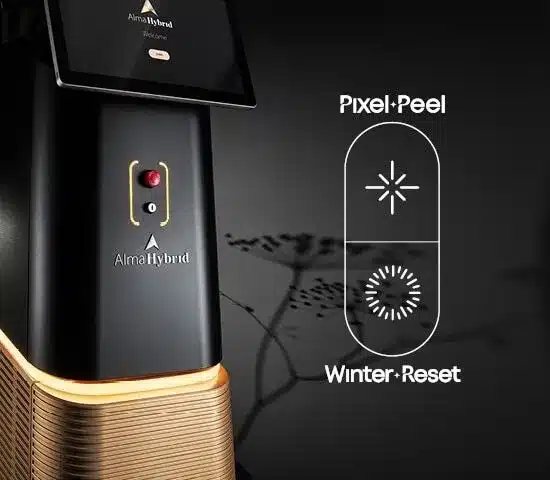
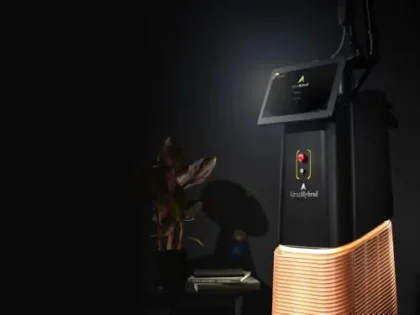
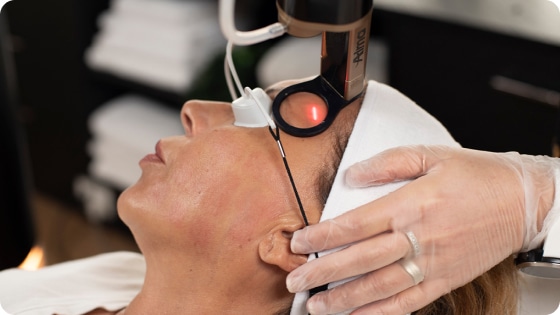
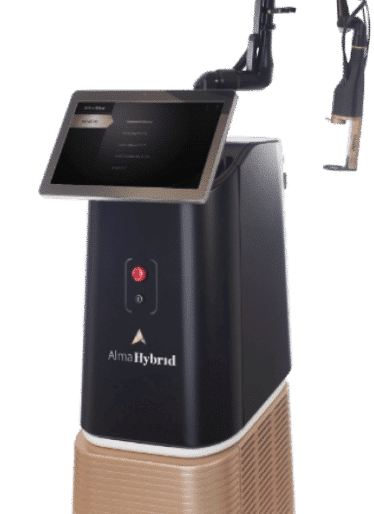
Alma Hybrid was designed as a flexible platform capable of supporting different resurfacing intents within a single system. By combining CO₂ and 1570 nm technologies, it enables clinics to tailor treatment depth and approach based on indication, readiness, and clinical judgment.
Within this platform, two distinct resurfacing protocols have been defined to support a structured approach:
• Pixel Peel as a lighter, repair-focused entry into resurfacing – utilizing low-parameter CO₂ to address accumulated surface damage with shorter downtime and lower commitment, making it easier for patients to begin their resurfacing journey.
• Winter Reset as a more intensive option for deeper correction when patients are ready -combining higher-parameter CO₂ with 1570 nm thermal stimulation to support both surface renewal and structural remodeling within a defined, advanced protocol.
These protocols are not positioned as alternatives, but as steps within a broader resurfacing pathway.
This structure allows clinics to:
- introduce resurfacing gradually
- maintain continuity on one platform
- plan progression without changing devices or logic
- support both patient understanding and clinic efficiency
Why Structure Supports Better Practice

Structure does not limit clinical freedom.
It protects it.
By defining clear pathways, clinics free themselves from reinventing the conversation at every consultation. Teams align around shared language. Patients understand where they are and what comes next.
Most importantly, structure allows resurfacing to become a long-term part of patient care, rather than a single, high-pressure decision.
In a modern aesthetic practice, success is not only about delivering strong treatments. It is about creating systems that support patients, clinicians, and businesses over time.
The Next Chapter of Resurfacing
Resurfacing is evolving, not because the technology has lost its relevance, but because the way patients engage with it has changed.
Clinics that respond to this shift by moving from isolated procedures to structured programs are better positioned to meet today’s expectations, manage their practice efficiently, and support long-term patient relationships.
Pixel Peel and Winter Reset, enabled by Alma Hybrid, reflect this evolution. Together, they represent a new chapter in resurfacing – one that is clearer for patients, more organized for clinics, and designed to progress rather than pressure.
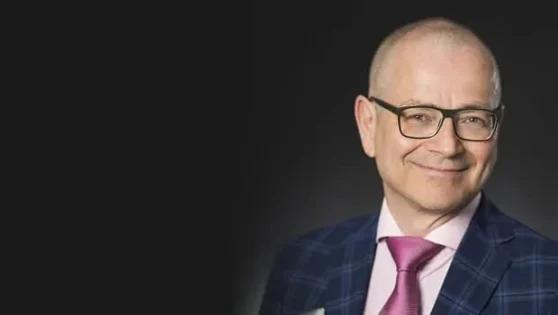
 Prof. Dr. Uwe Paasch